

Filter products
Choose one option per group.
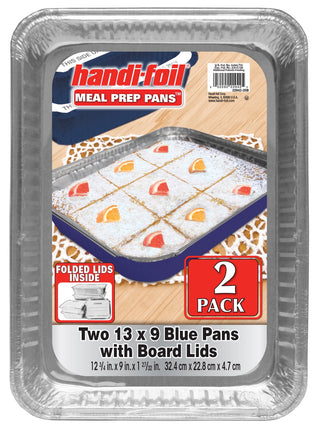
Handi-Foil 13" x 9" Blue Aluminum Meal Prep Pans with Board Lids, 2 Count

Bentgo All-in-One Glass Salad Container, 5-Compartment, Dark Gray, 61 oz (7.6 cups) (BGLASSAL-DG)

Rubbermaid Pack & Go Rectangle Microwaveable Container with Steamer Tray, 2.45 L (2.59 qt), 100% Leakproof, Dishwasher Safe, Clear
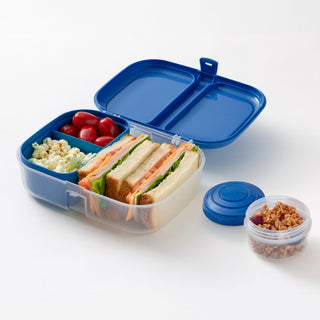
Rubbermaid Pack & Go 1.1 L/ 1.16quart Ribbon Bento Box with Mini Bite, Meal Prep Container with Compartments and Dividers
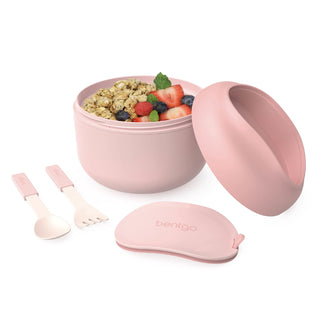
Bentgo Insulated Leak-Resistant Bowl with Snack Compartment, Collapsible Utensils, BPA-Free (Blush), 20.8 fl oz, Pink

Freshware Reusable 1-Compartment Bento Meal Prep Lunch Boxes with Lids (15 pack), Clear

Freshware 1-Compartment Bento Lunch Boxes with Lids, 28 oz, Reusable, Microwave/Dishwasher/Freezer Safe, YH-1X15 (15 pack), Black

Freshware 3-Compartment Meal Prep Containers with Lids, 21-Count

Bentgo Plastic Salad Container 5-Compartment Slate or 6.75 Cups. (BGOSAL-S), Made for Portable Food Storage and Lunch Transportation, 54 oz, Gray

Bentgo Prep 20-Piece 2-Compartment Meal Prep Containers with Lids, PFAS & BPA Free, Microwave/Freezer/Dishwasher Safe (Blush Pink)

Bentgo Prep 3-Compartment Meal Prep Containers with Lids PFAS & BPA Free Microwave Freezer Dishwasher Safe To Go (Lilac) (BGPRP3-LC)

Rubbermaid TakeAlongs 2.9-Cup Square Food Storage Containers, Red (4 pack)

Bentgo Snack Cup, Reusable Leak-Proof Snack Container with Toppings Compartment and Dual-Sealing Lid, Dishwasher Safe (Orchid), Purple

Kitchen Details 10 Piece Plastic Nesting Food Storage Containers, 67 oz

Gladware Design Series Medium Rectangle Containers, 24 oz, 4 Count

Rubbermaid TakeAlongs 6.2 Cup Serving Bowl Food Storage Containers, Set of 3, Red

Rubbermaid TakeAlongs, 5 Cup, Set of 3, Red, Medium Bowls Plastic Food Storage Containers

Gladware Family Variety Pack Containers, 12 Count

Rubbermaid TakeAlongs, 3.7 Cups, Meal Prep Food Storage Container with Built-In Divider (Includes 10 Containers + 10 Lids), Black

Gladware To Go Medium Rectangle Snack Containers, 24 oz, 4 Count

Stasher Premium Food-Safe Reusable Silicone Stretch Lids, Clear, Various Sizes (4 pack)

GladWare MatchWare Containers Value Pack Round Rectangle Square, 20 Count

Rubbermaid Take alongs Divided Rectangular Food Storage Containers, 3.7 Cup, 3-Pack (2 pack)
Compare food storage within paper & kitchen supplies by product function, then match the attributes below to the item you need.
Food Storage Bag and Container Formats
Food storage format determines the main buying path.
Compare flexible storage bags by capacity and closure when the purchase is a bag or roll. Rigid vessels have different shape and lid decisions. A product’s food-use statement does not establish all storage conditions. Choose the physical form needed before interpreting a larger count or an apparently similar nominal capacity.
Food Storage Capacity and Physical Fit
Food storage capacity should be checked alongside dimensions and the shape of the item being stored. A volume label and a physical measurement describe different attributes. Rigid compartments and flexible openings require separate checks. The focused bag or container page supplies the appropriate comparison. A larger outer pack does not change the dimensions of each supplied unit.
Food Storage Closures and Components
Food storage closures should be selected for the actual bag, base or equipment involved. Compare food containers by capacity and lid arrangement for a rigid storage purchase.
A replacement cover and a complete vessel represent different contents. Vacuum formats also need their equipment requirements checked. Visual similarity is insufficient evidence of a matching seal, lid or connection.
Food Storage Temperature and Care Labels
Food storage temperature and care labels must be checked on the exact item and its separate components. Food contact alone does not establish freezer, microwave or dishwasher conditions. A lid may have different guidance from its base. Select the permitted application before choosing reusable or disposable supply. Related materials should not inherit one another’s care instructions merely because the products share a storage purpose.
Food Storage Sets and Mixed Capacities
Food storage sets should identify the count of each size and component.
A total piece count may include both bases and covers. Bag packs also need the number of each capacity when mixed. For a wrap or cooking liner, compare food wraps by material and application through that separate route rather than treating all food-use formats as equivalent storage units.
Food Storage Buying Paths
Food-storage buying paths keep flexible bags, rigid vessels and replacement covers distinct. Confirm dimensions, closure and the permitted storage conditions in the focused family before comparing quantity. Mixed capacities and separately counted components require their own contents checks rather than a single assumed unit total.
| Attribute | First format | Alternative format |
|---|---|---|
| Decision | Flexible bags | Rigid containers |
| Physical fit | Dimensions and opening | Dimensions, shape and compartments |
| Closure | Exact seal or equipment system | Exact lid and base arrangement |
| Temperature | Bag-specific guidance | Component-specific guidance |
| Care | Disposable or reusable directions | Base and lid directions |
| Quantity | Bags or roll length | Complete sets and components separately |
Food Storage Questions
Which food-storage format should I compare first?
Choose flexible bags or rigid containers by the physical form needed, then review capacity and closure within that family.
Does capacity establish physical fit?
Check dimensions and shape separately. Equal nominal volume does not establish the same opening or footprint.
Should lids and bases share one assumed care label?
Read each component’s directions where they differ.