

Miracle-Gro Water Soluble Rose Plant Food, 1.5 lb, Feeds Instantly

Ottomanson Natural Grass Indoor Outdoor Artificial Turf Rug 3' x 6'6" Green Lawn Carpet

Proflora 18” x 48” Moss Mat, True Green Floramat, Artificial Turf

GrowTrax 50-ft. x 1-ft. Sun & Shade, Tall Fescue Mixture Grass Seed

AllGreen Precut 6 ft. x 8 ft. Indoor/Outdoor Artificial Turf, Durable Polypropylene Blades

Barenbrug Centipede Grass Partial Shade/Sun Grass Seed 8 oz

Scotts GrubEx1 Season Long Grub Killer, 5, 000 sq. ft., 14.35 lb

Expert Gardener Weed and Feed Fertilizer 28-0-3, 13.2 lb Covers up to 5, 000 Sq. ft.

PetraMax Green Grass Paint and Plant Sprayer, Non-toxic, 32 oz, Instant Green

Expert Gardener Weed & Feed Plus Crabgrass Control Lawn Fertilizer, 18-0-1, 12 lb

Whitney Farms Organic Blood Meal, Nitrogen Supplement for In-Ground Plants, 3 lb

Espoma Garden-tone Organic Food, 27 lb

Sweet Home Stores Artificial Grass 2'7" x 5' Waterproof Turf Mat for Pets, Patio, Entryway, Porch

Emerald Green 4 in. Width X 4 in. Length x 38 Mm Thick Sample Pre Cut Artificial Grass Turf Roll

Ottomanson Waterproof Artificial Grass 3x5 Indoor Area Rug Fake Grass for Patio, 2'7" x 5', Green

Sweet Home Stores Artificial Grass Turf 22" x 10' Waterproof Outdoor Rug for Lawn Patio Balcony

Sweet Home Stores Artificial Grass Turf 22" x 8' Waterproof Outdoor Rug for Lawn Patio Balcony

Sweet Home Stores Artificial Grass 2'7" x 3' Waterproof Turf Mat for Pets, Patio, Entryway, Porch
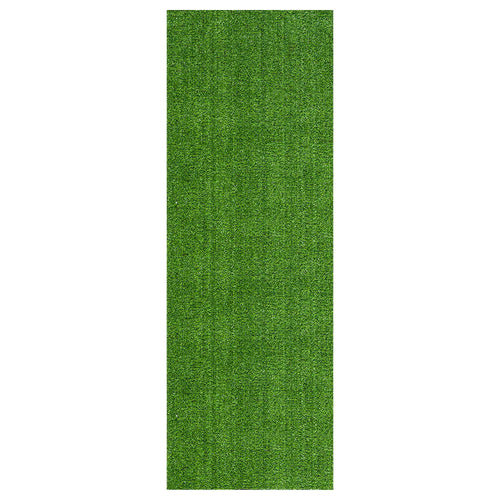
Sweet Home Stores Artificial Grass Turf 2'7" x 7' Waterproof Outdoor Rug for Lawn Patio Balcony

Sweet Home Stores Artificial Grass Turf 22" x 15' Waterproof Outdoor Rug for Lawn Patio Balcony

Sweet Home Stores Artificial Grass 2'7" x 4' Waterproof Turf Mat for Pets, Patio, Entryway, Porch

Sweet Home Stores Artificial Grass Turf 3'11" x 6'7" Waterproof Outdoor Rug for Lawn Backyard Play Areas

Sweet Home Stores Artificial Grass Turf 22" x 59" Waterproof Outdoor Rug for Lawn Patio Balcony
Coverage Area and Bag Size
Coverage is printed on every granular product and is stated at a specific spreader setting. Figures here run 24 to 16,000 square feet, clustering at 4,000 and 5,000, with bag weights from 0.16 to 50 pounds.
Measure the lawn first.
A 5,000 square foot bag on a 12,000 square foot lawn means three bags, and the price per square foot rarely improves enough across bag sizes to make guessing worthwhile. Subtract the beds and the drive from the lot size rather than treating the whole plot as lawn.
Granular and Liquid Formats
Granular products are spread dry and watered in.
Liquids at 17 listings and concentrates at 24 attach to a hose or a sprayer and cover faster with less equipment.
Granular needs a spreader, which is a separate purchase from lawn equipment and is the reason a first-time buyer ends up with a bag they cannot apply evenly. Hand-scattering produces stripes that show for a season.
Liquids cover unevenly in wind and cost more per square foot.
Neither format is better; they suit different lawn sizes.
Concentrates and Dilution
Concentrates state a dilution on the label and a coverage figure that assumes it. Sizes here run 8 to 128 fluid ounces with 32 the most common, and gallons from 0.5 to 25 on the ready-to-use end.
The stated coverage only holds at the stated dilution.
Mixing strong to work faster reduces the area a bottle treats and does not speed anything up.
Grass Seed and Overseeding
Seed is sold by weight and by coverage, and the two coverage figures on a bag differ: new lawns take roughly double the seed rate of overseeding an existing one. Pennington at 54 listings and Scotts at 62 carry most of the range.
Read which rate a coverage figure refers to.
A bag stating 5,000 square feet for overseeding covers about 2,500 for a new lawn.
Organic and Natural Lines
43 listings state organic, the largest attribute block in the collection, led by Espoma at 24. These are sold on the same coverage basis as conventional products and are typically applied at higher rates, so the bag covers less than its weight suggests.
Weeds and Boundaries
Products aimed at weeds rather than at grass sit in weed barrier and weed control, which carries both the fabric and the concentrates.
Every product on either page states what it may be used on, and that statement is the part to read.
Lawn Formats Compared
| Format | Sized by | Common coverage | Needs | Price band |
|---|---|---|---|---|
| Granular fertiliser | Pounds | 4,000 to 5,000 sq ft | Spreader | $23 to $58 |
| Liquid, hose-end | Fluid ounces | 2,000 to 4,000 sq ft | Hose | $20 to $45 |
| Concentrate | Fluid ounces | Varies by dilution | Sprayer | $25 to $70 |
| Grass seed, overseed | Pounds | 4,000 to 5,000 sq ft | Spreader | $23 to $60 |
| Grass seed, new lawn | Pounds | Half the overseed figure | Spreader | $23 to $60 |
Lawn Care Questions
How do I work out how much I need?
Measure the lawn and subtract beds and drive. Coverage here runs 24 to 16,000 square feet with 4,000 and 5,000 the common bag sizes.
Do I need a spreader?
For granular products, yes. Hand-scattering produces stripes that show for a season. Spreaders sit in the lawn equipment collection.
Is liquid better than granular?
Neither is better. Liquid covers faster with less equipment and applies unevenly in wind; granular is cheaper per square foot and needs a spreader.
Why do seed bags list two coverage figures?
New lawns take about double the seed rate of overseeding. A bag stating 5,000 square feet for overseeding covers roughly 2,500 as a new lawn.
Does mixing concentrate stronger work faster?
No. The stated coverage assumes the stated dilution, so mixing strong simply reduces the area the bottle treats.